Nando’s has renewed its MyCiTi bus branding campaign with Transit Ads™ until the end of 2018. The recent campaigns have been extremely successful, testament to the impact, frequency and ROI delivered by this highly visible medium. MyCiTi busses are large-scale, moving billboards that take brand message to commuters, pedestrians and motorists within the greater Cape […]
YouTube Go features on Transit TV
The widespread Transit TV™ audience is now being exposed to the benefits and usage of a new offering from YouTube called YouTube Go. Understanding the value of digital platforms, YouTube Go has commissioned Transit TV™ to flight its commercial to ensure that South African consumers know about the new app and understand how to use it.
YouTube Go is a new app that allows consumers to enjoy offline viewing and sharing, even with limited data or a slow connection. The current YouTube app is too data-heavy for it to be usable to most viewers. The new app is nimbler and features a more user-friendly interface.
Shamy Naidu, Executive: Transit Ads™ says, “YouTube Go was designed and built from the ground up with insights to bring video to mobile users in a way that is more considerate of their data and connectivity, while still being locally relevant and social. This makes it a seamless fit with Transit TV™, a channel which is nimble, relevant and entertaining.”
Transit TV™ reaches an audience of 13 million
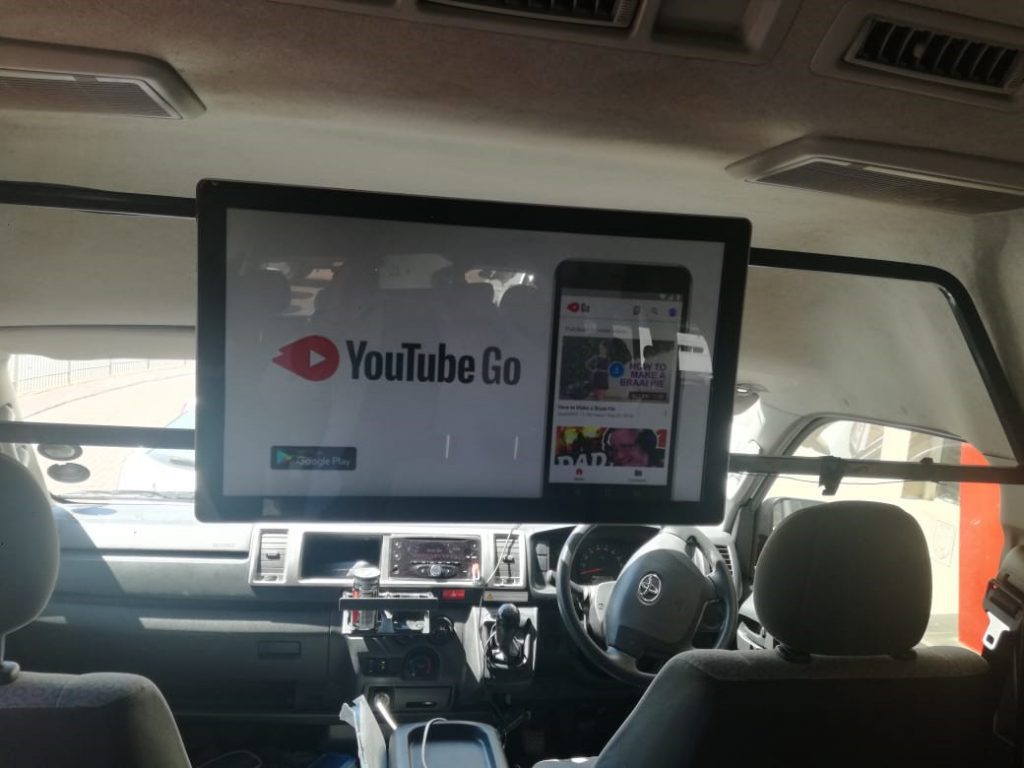
The YouTube Go commercial is being flighted to an audience of over 13 million viewers a month inside taxis, at PRASA train stations, bus stations and taxi ranks. The taxi industry sees more than 15 million commuter trips taking place weekly, while the train and bus industry make over 2 million and 9 million weekly commuter trips, respectively. For brands advertising on the channel, these numbers translate to frequency, impact and high recall.
A captive audience receptive to information
Transit TV™ flights to a captive audience that experiences long dwell times – 59 minutes per day in taxis, 68 minutes  per day on trains, and 66 minutes per day on buses. The viewers are household purchasing decision makers, are technologically savvy and economically active.
This audience is keen to learn more about new products and brands and make a purchase within five minutes of disembarking from their mode of transport. What does this mean for advertisers? Exposing a brand on Transit.TV™ provides a unique opportunity to influence purchase behaviour – whether the consumer is aware of this or not.
Advertising on the channel is interspersed with content that is relevant entertaining, engaging and informative and this holds the attention of the viewer and subsequently ensures high brand and messaging recall.
Connecting with a technologically astute audience
“YouTube Go is a perfect fit with the commuter on the go. This commuter is connected via social media and engages with various channels many times a day. They have smart phones and tend to use it as a preferred medium of communication. Transit TV™ is a seamless fit for the YouTube Go brand,” explains Naidu.
Transit TV™ flights content that is entertaining, educational, relevant and informative. It covers news, sport, music, entertainment and lifestyle, ensuring that audience attention continues to be drawn to the screens.
For more information on how Transit Ads™ can help your brand successfully engage with the highly desirable commuter market, contact Hugh Wilson on 0861 776 826 or hugh@lion-test-sites.co.za or DM @TransitAds_
You may also like:
Why 360 degree campaigns work in the Transit Environment
Shamy Naidu, Executive: Transit Ads™ outlines the importance of implementing 360° advertising campaigns within the highly effective, high frequency and captive transit environment. As in any other advertising environment, the need for a 360° campaign in the transit environment is vital to ensure maximise ROI and to keep brand and product top of mind. Transit […]
The Evolution of the Billboard – A look at the growth of Digital Billboards in South Africa – By Jacques Du Preez, CEO Provantage Media Group
As we all know by now, the traditional billboard has evolved and we have seen a rapid expansion of digital roadside billboards in the South African urban landscape. Around seven years ago there were only two or three media owners in South Africa that had constructed digital billboards, and as a result they could largely […]